
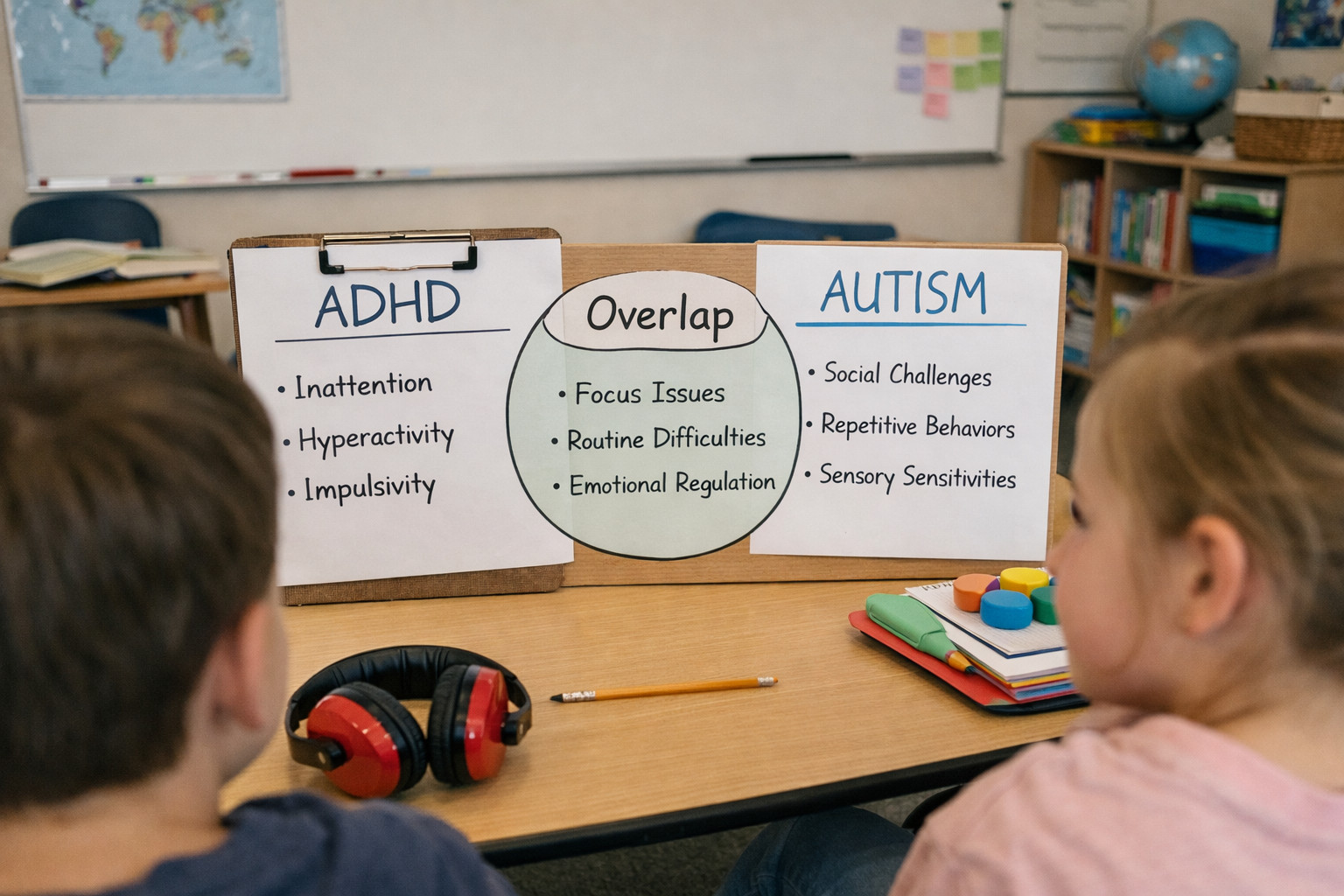
In the world of neurodevelopmental conditions, the ADHD and Autism overlap is more common than many realize. As a parent or caregiver, you might find yourself questioning whether your child’s attention issues stem from autism, ADHD, or a combination of both. At Opya Care, we specialize in providing personalized autism therapy and support, helping families navigate these complexities to ensure children receive the right interventions. In this post, we’ll dive into the shared traits, key distinctions, and the importance of accurate diagnosis, drawing on insights from Dr. Julia Evans, a Clinical Neuropsychologist.
How Common Is the ADHD and Autism Overlap?
Research highlights a significant ADHD and Autism overlap, with studies showing that 30–50% of children diagnosed with autism also meet the criteria for ADHD. Conversely, many kids with ADHD exhibit traits often associated with autism, such as heightened sensory sensitivities or difficulties in social interactions. This overlap can lead to confusion, especially when diagnoses evolve over time or appear mixed.
Understanding this prevalence is key for families seeking clarity. At Opya Care, we emphasize early and thorough assessments to unravel these layers, ensuring that support strategies are tailored to the child’s unique needs. If you’re noticing signs in your child, recognizing the ADHD and Autism overlap early can pave the way for more effective therapy and educational plans.
Where Autism and ADHD Overlap
The overlap of ADHD and autism often manifests in similar behaviors that can make differentiation challenging at first glance. Children with either or both conditions might display:
- Difficulty sustaining attention on tasks or activities
- High levels of activity, restlessness, or fidgeting
- Impulsivity in actions or decision-making
- Challenges with emotional regulation, leading to frequent meltdowns
- Sensory sensitivities, such as overreacting to sounds, textures, or lights
- Executive functioning difficulties, including problems with planning, organization, and completing tasks
These shared features underscore why a surface-level observation isn’t enough. The overlap of ADHD and autism requires a deeper look to avoid misattribution of symptoms, which is where specialized evaluations at centers like Opya Care become invaluable.
Key Differences Between ADHD and Autism
Despite the ADHD and Autism overlap, the root causes and core characteristics of these conditions differ significantly, influencing how they should be addressed.
ADHD is fundamentally a disorder centered on attention, hyperactivity, and impulse control. Children with ADHD often desire social connections and understand basic social norms but struggle due to inattention or lack of self-regulation. Their challenges are more about consistency and focus rather than inherent social comprehension.
In contrast, autism is a broader neurodevelopmental condition impacting social communication, behavioral flexibility, and sensory processing. Kids with autism may find it hard to interpret nonverbal cues, empathize with others’ perspectives, adapt to changes in routine, or handle sensory overload—not primarily because of distraction, but due to differences in how their brains process information.
Grasping these distinctions within the ADHD and Autism overlap helps in crafting targeted interventions, such as behavioral therapies or sensory supports offered at Opya Care.
Why Dual Diagnosis Matters
When ADHD and Autism overlap in a child, a dual diagnosis is critical. Addressing only one condition can overlook essential needs, hindering progress in home, school, and social environments. For instance, treating ADHD symptoms alone might improve focus but fail to address autism-related social or sensory challenges, leading to ongoing frustrations.
A comprehensive approach to the ADHD and Autism overlap ensures holistic support. At Opya Care, our therapy programs integrate strategies for both, promoting better outcomes in emotional regulation, academic performance, and daily functioning.
The Value of a Comprehensive Clinical Evaluation
To accurately identify the ADHD and Autism overlap, a thorough clinical evaluation is essential. This process goes beyond basic screenings, assessing the child across multiple domains:
- Attention and focus abilities
- Executive functioning skills like planning and organization
- Social communication and interaction patterns
- Learning styles and academic strengths
- Emotional regulation and behavioral responses
- Sensory processing preferences
- Full developmental history from infancy onward
By examining these areas, clinicians can pinpoint the underlying causes of behaviors, distinguishing between ADHD-driven impulsivity and autism-related rigidities. Opya Care’s evaluations provide families with a clear, actionable roadmap, including recommendations for therapy, school accommodations, and home strategies.
Final Thoughts for Parents
Navigating the ADHD and Autism overlap can feel overwhelming, but knowledge and professional guidance make all the difference. If questions arise about your child’s development, prioritize a comprehensive evaluation to unlock the support they need to thrive. At Opya Care, we’re committed to empowering families with evidence-based autism therapy and resources. Reach out today to learn how we can help your child succeed in every setting.
By Dr. Julia Evans, Clinical Neuropsychologist at Opya Care