Every child deserves to be heard, and for those facing challenges with spoken language, AAC in ABA therapy offers a powerful pathway to expression. At Opya Care, we believe communication is about connection, not just words. By integrating Augmentative and Alternative Communication (AAC) tools with Applied Behavior Analysis (ABA) therapy, we help children share their needs, thoughts, and feelings in ways that feel natural and empowering. Whether through picture cards, communication boards, or advanced devices, AAC bridges gaps and builds confidence, allowing children to engage more fully with the world around them.
In this post, we’ll explore what AAC is, how it’s incorporated into ABA sessions, common concerns about its impact on speech, and Opya Care’s family-centered approach. If you’re a parent or caregiver seeking ways to support your child’s communication journey, read on to see how AAC in ABA therapy can make a meaningful difference.
What Is AAC?
Augmentative and Alternative Communication (AAC) refers to a range of tools and strategies designed to support or replace spoken language for individuals who may struggle with verbal communication. It’s not a one-size-fits-all solution; instead, AAC adapts to each child’s unique needs and can evolve as their skills develop.
Common forms of AAC include:
- Low-tech options: Picture exchange systems (like PECS), communication boards, or symbol cards that allow children to point or exchange images to convey messages.
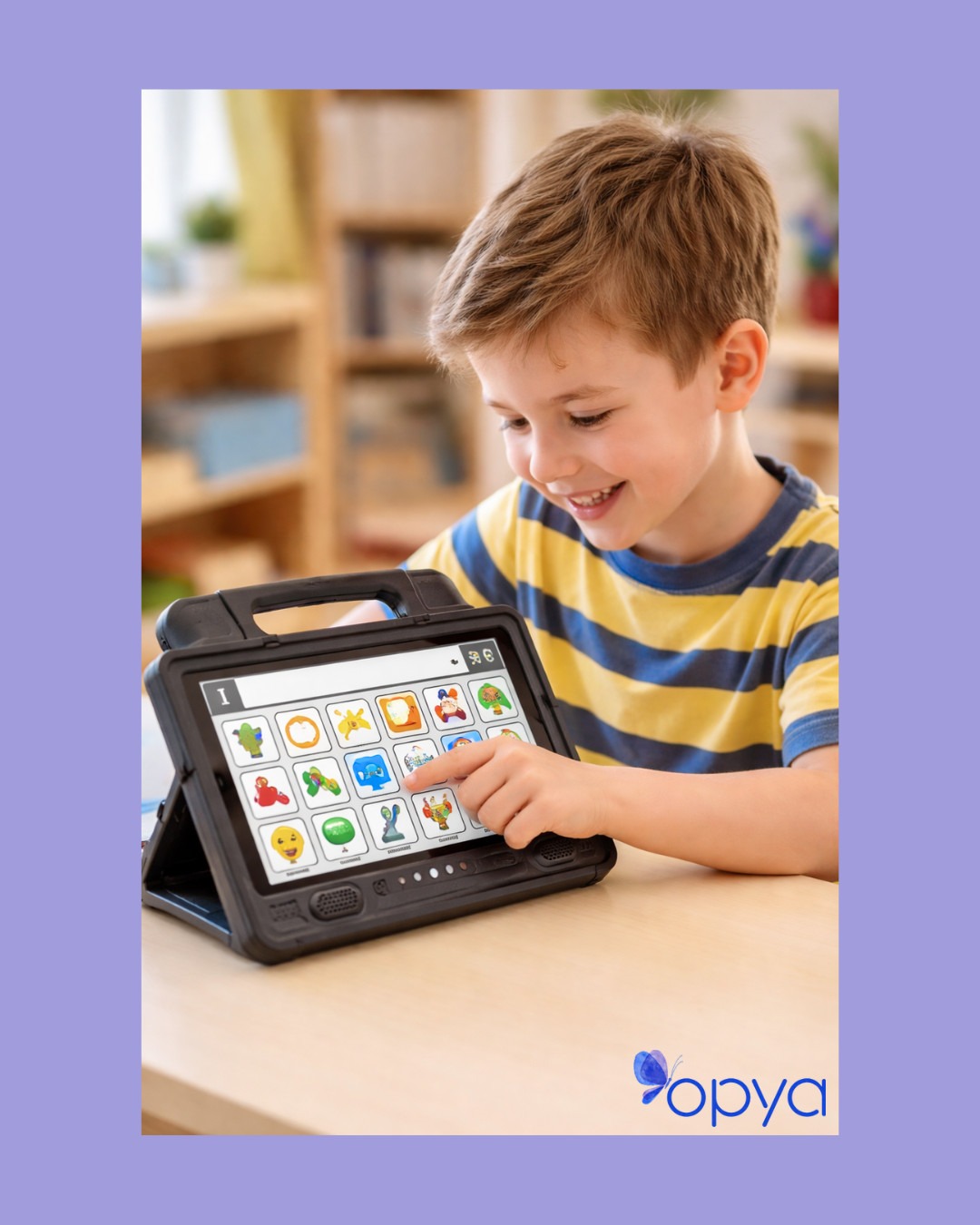
- High-tech devices: Speech-generating apps on tablets or dedicated devices that produce spoken words based on selected icons or text.
- Unaided methods: Gestures, sign language, or facial expressions that enhance communication without tools.
AAC can supplement emerging speech or serve as a primary method, depending on the child. The goal is always to promote independence and reduce barriers, making it an essential component of AAC in ABA therapy for children on the autism spectrum.
How AAC Is Used in ABA Sessions
In ABA therapy, communication isn’t taught in isolation—it’s embedded into fun, everyday activities to make learning engaging and relevant. Therapists at Opya Care introduce AAC tools during play, snacks, routines, and transitions, modeling their use and encouraging children to participate actively.
Here’s how AAC enhances ABA sessions:
- Making Choices: Children use AAC to select activities or items, fostering decision-making skills and autonomy.
- Requesting Items: Whether it’s a favorite toy or snack, AAC helps children express wants clearly, reducing guesswork for caregivers.
- Sharing Preferences: Tools allow kids to indicate likes and dislikes, building social interaction and emotional awareness.
- Reducing Frustration: By providing immediate ways to communicate, AAC minimizes meltdowns and promotes positive behaviors.
Every communication attempt—be it through AAC, gestures, sounds, or emerging words—is met with positive reinforcement. This approach not only builds skills but also boosts self-esteem, showing children the power of their voice in AAC in ABA therapy.
Will AAC Stop My Child From Talking?
One of the most frequent questions we hear from families is whether introducing AAC will hinder verbal speech development. Rest assured, the evidence points to the opposite. Research from organizations like the American Speech-Language-Hearing Association (ASHA) indicates that AAC often accelerates language growth by alleviating frustration and demonstrating the value of communication.
When children experience success with AAC, they’re more motivated to explore verbal options. It acts as a scaffold, supporting speech rather than replacing it. In fact, many children transition from AAC to spoken words as they gain confidence. At Opya Care, we monitor progress closely and adjust strategies to encourage all forms of communication, ensuring AAC in ABA therapy complements your child’s natural development.
Our Approach at Opya Care
At Opya Care, we prioritize a personalized, family-centered model for AAC in ABA therapy. We collaborate with parents, caregivers, and clinical teams to select and implement AAC tools that fit seamlessly into your child’s daily life—both in therapy sessions and at home.
Our process includes:
- Individual Assessments: Evaluating your child’s strengths, preferences, and needs to recommend the right AAC options.
- Family Training: Teaching you how to use AAC consistently, so communication thrives beyond therapy.
- Ongoing Support: Regular check-ins to refine tools as your child grows, ensuring they remain effective and engaging.
- Holistic Integration: Honoring all communication methods, from gestures to devices, to create a supportive environment.
We view communication as connection, and AAC empowers children to interact with their world on their terms. It’s about celebrating progress, no matter the form.
Communication opens doors to relationships, learning, and joy. If your child is navigating communication challenges, AAC in ABA therapy could be a game-changer. At Opya Care, we’re committed to helping every child find their voice.
Have questions? Reach out to our team at [email protected] or call (888) 300-6792. We’re here to support you every step of the way.