Autism Journey
Your Autism Journey The Power of ABA Therapy
Our focus is Applied Behavior Analysis (ABA) therapy—an evidence-based approach proven to help individuals with autism build essential life skills. Our experienced clinical team creates personalized ABA treatment plans tailored to your loved one’s unique strengths, challenges, and goals. We’re committed to helping every individual reach their full potential.


Benefits of Early Intervention Therapies
Starting early for best results
Early intervention therapies for autism begin around preschool age (18-36 months) when a child’s brain is highly receptive to change. This crucial period provides the best start and increases the likelihood of treatment having significant long-term positive effects on a child’s skills development and learning.
Key Benefits of Early Intervention Autism Care
- Maximizes developmental potential
- Improves long-term outcomes
- Enhances skill development
- Reduces frustrations

Our Focused Approach to Autism Care
At Spectrum Pride (formerly Opya), we know that no single therapeutic approach works for every individual diagnosed with autism.
That’s why we specialize in Applied Behavior Analysis (ABA) therapy—an evidence-based approach that helps individuals build communication, social, and daily living skills. Our board-certified behavior analysts (BCBAs) work closely with families to create individualized treatment plans tailored to each person’s unique needs.
Our clinical team of BCBAs and Registered Behavior Technicians (RBTs) is dedicated to helping individuals with autism reach their full potential through consistent, compassionate care.
The Importance of ABA Therapy
Socialization
Improving interaction with others and understanding social cues.
Communication
Enhancing verbal and non-verbal communication skills.
Self-awareness
Developing an understanding of one's own emotions and reactions.
Physical abilities
Improving fine and gross motor skills.
Cognitive skills
Enhancing problem-solving and critical thinking abilities.
Self-regulation
Learning to manage emotions and behaviors effectively.
Efficacy of Early Intervention ABA Therapy
Research shows that many individuals who receive ABA therapy experience significant improvements in skills and quality of life. This highlights the importance of starting ABA as soon as possible after an autism diagnosis, regardless of age.


Launching Your Loved One’s Journey of Lifelong Skills Development
Our ABA program is the first step in your loved one’s developmental journey.
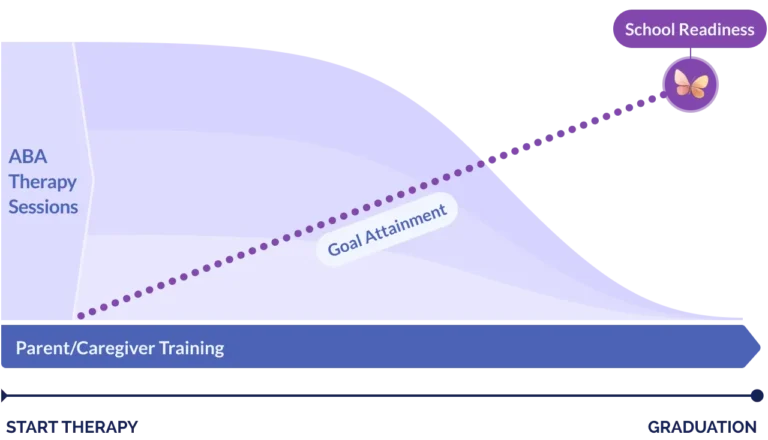
With consistent ABA sessions, your loved one will achieve established goals that build essential daily living skills and promote long-term independence. As progress is made, recommended ABA therapy hours will be adjusted based on need, resulting in a successful program.
Caregiver Training is an integral part of your loved one’s ABA program. You will work hand in hand with your BCBA to learn how autism affects your loved one and how best to support their development. This combined approach ensures that you, your loved one, and your family are equipped for the ongoing journey of growth and development.
First Episode of Care