
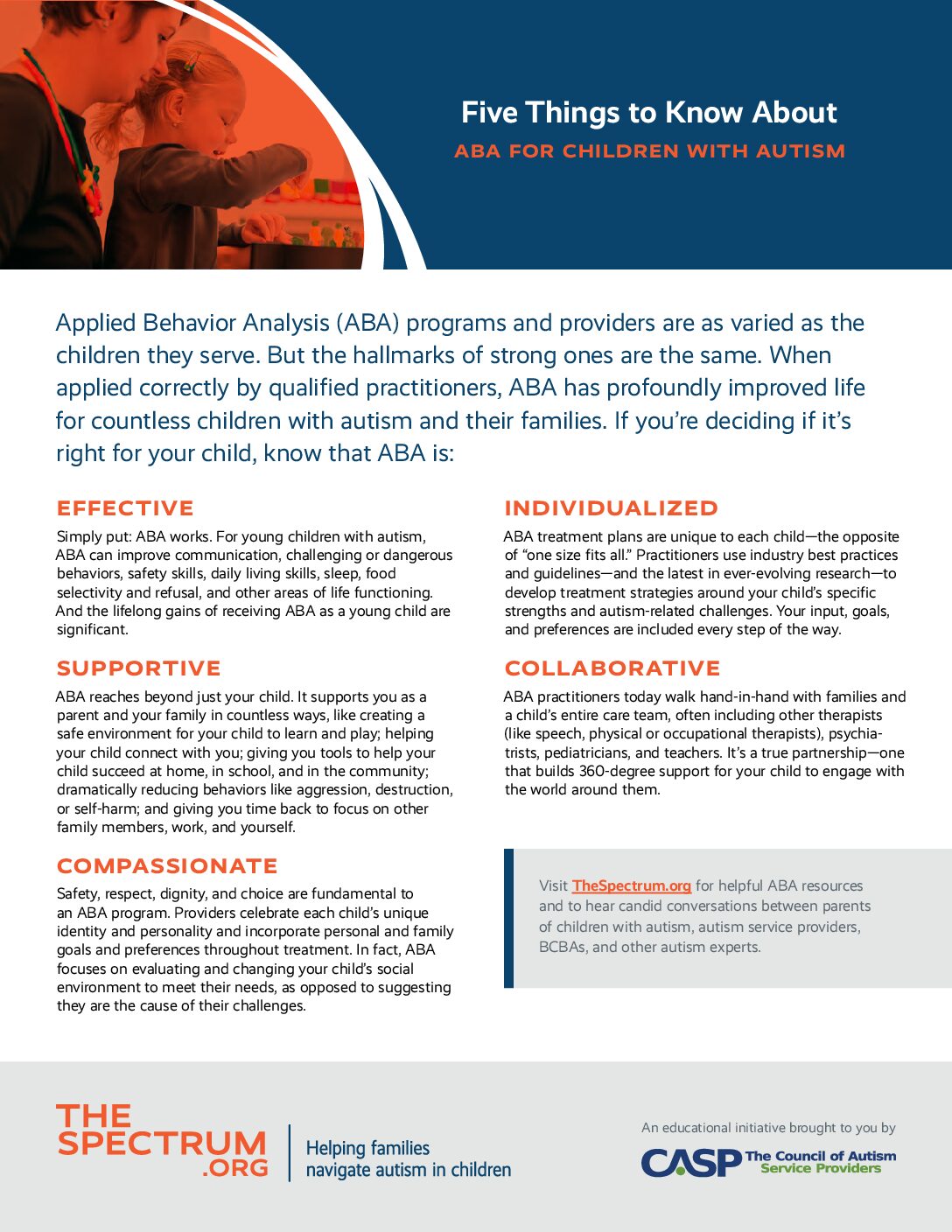
What Is ABA Therapy? 5 Essential Things Parents Should Know
If you’re exploring therapy options for your child with autism, you’ve likely come across Applied Behavior Analysis (ABA). While ABA therapy programs can vary widely, strong, effective programs share common principles that support children’s growth and development.
When implemented by qualified professionals, ABA therapy has been shown to significantly improve outcomes for children with autism and their families.
In this guide, TheSpectrum.org breaks down five essential things every parent should know about ABA therapy—and how it can help your child thrive.
What Is ABA Therapy?
ABA (Applied Behavior Analysis) is a research-based approach that focuses on improving meaningful behaviors, including communication, social skills, and daily living abilities.
Rather than using a one-size-fits-all model, ABA therapy adapts to each child’s unique strengths, challenges, and goals—making it one of the most personalized autism therapies available today.
1. ABA Therapy Is Individualized
One of the most important aspects of ABA therapy is that every treatment plan is tailored to the individual child.
Therapists use:
- Evidence-based strategies
- Ongoing assessments
- Parent input and family goals
to create a plan that fits your child—not the other way around.
This personalized approach ensures that therapy targets the skills that matter most for your child’s development and independence.
2. ABA Therapy Is Collaborative
ABA therapy doesn’t happen in isolation. It’s designed to be a team-based approach involving:
- Parents and caregivers
- Teachers and school staff
- Speech, occupational, or physical therapists
- Pediatricians and other healthcare providers
This collaboration creates a consistent, supportive environment across home, school, and community settings—helping children generalize skills more effectively.
3. ABA Therapy Is Effective
ABA is one of the most well-researched and widely used therapies for autism—and for good reason.
Studies and real-world outcomes show that ABA therapy can help improve:
- Communication and language skills
- Social interactions
- Daily living skills (like dressing, eating, and hygiene)
- Safety awareness
- Sleep and feeding challenges
- Reduction of harmful or disruptive behaviors
Early intervention with ABA therapy can lead to long-term, meaningful improvements in a child’s quality of life.
4. ABA Therapy Supports the Whole Family
ABA therapy doesn’t just benefit the child—it supports the entire family.
Parents often gain:
- Practical tools to manage challenging behaviors
- Strategies to build stronger connections with their child
- Guidance for creating structured, supportive home environments
Many families also experience reduced stress and more time to focus on work, relationships, and self-care.
5. ABA Therapy Is Compassionate and Respectful
Modern ABA therapy emphasizes dignity, respect, and individuality.
Key principles include:
- Honoring each child’s personality and identity
- Incorporating family values and preferences
- Prioritizing safety and emotional well-being
- Adjusting the environment to meet the child’s needs
Rather than trying to “fix” a child, ABA focuses on helping them succeed in their world by building skills and supportive environments.
Is ABA Therapy Right for Your Child?
Every child with autism is unique, and choosing the right therapy is an important decision.
ABA therapy may be a good fit if you’re looking for:
- A structured, evidence-based approach
- Measurable progress and goal tracking
- Strong family involvement
- Support across multiple environments
The best next step is to connect with a qualified provider who can evaluate your child’s needs and guide you through the process.
How Opya Care Supports Families
At Opya Care, we believe therapy should be personalized, compassionate, and family-centered.
Our approach to ABA therapy focuses on:
- Individualized care plans
- Collaboration with families and care teams
- Evidence-based practices
- Whole-child and whole-family support
We’re here to help your child build skills, confidence, and independence—while supporting you every step of the way.